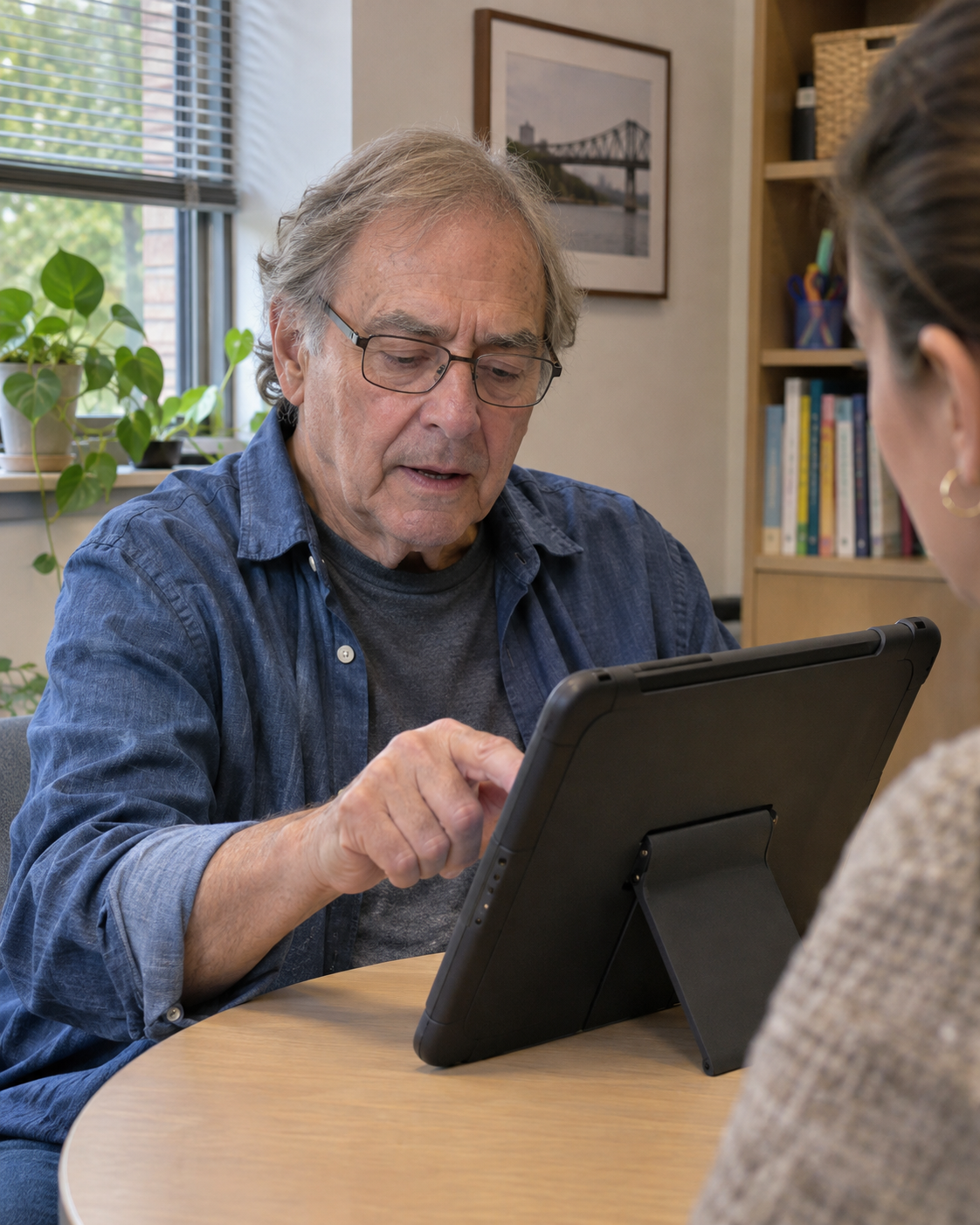
When speaking is difficult or speech alone doesn’t meet someone’s everyday needs, augmentative and alternative communication (AAC) can give them more ways to express themselves. A speech generating device (SGD) is one type of AAC. It produces a spoken message when someone selects a picture, chooses a word, or types what they want to say.
At Speech Pathology Solutions, our speech-language pathologists look at how each person communicates now, what they want to be able to say, and where they need support. We consider which tools would be easiest to use in everyday settings, from asking a question in class to joining a conversation at home. We work with Lingraphica and Tobii Dynavox and use devices from both companies. The assessment helps us recommend communication tools and identify goals for therapy
who we help
We help children, teens, and adults explore communication tools that fit their needs at home, at school, at work, and in the community.
What is the difference between AAC and a speech-generating device?
AAC is the broader term for tools and strategies people use to support communication. It can include gestures, picture boards, communication apps, and speech-generating devices. A speech-generating device is a type of AAC that produces spoken messages aloud.
Who might benefit from an AAC assessment?
An assessment may be helpful for anyone whose speech doesn’t consistently meet their everyday communication needs. That can include a child who uses few spoken words, a teen whose speech is hard to understand, or an adult whose ability to speak has changed.
What happens during an AAC assessment?
A speech-language pathologist learns about your communication goals and looks at how you communicate in daily life. The assessment may include trying different options and comparing features such as picture or text layouts and how you select a message. Family members and caregivers can share what works well at home and where more support would help.
Can someone use AAC if they already speak?
Yes. AAC can be used alongside speech. Someone might speak when they’re comfortable and use a device to clarify a message, communicate when they’re tired, or share something that’s difficult to say aloud.
What can treatment look like after the assessment?
Therapy can focus on using the recommended tools in everyday situations, such as asking for help, sharing an opinion, or taking part in a conversation. It can also help family members and caregivers learn how to support communication during daily routines.
insurances accepted
be the best version of yourself - we'll help you along the way