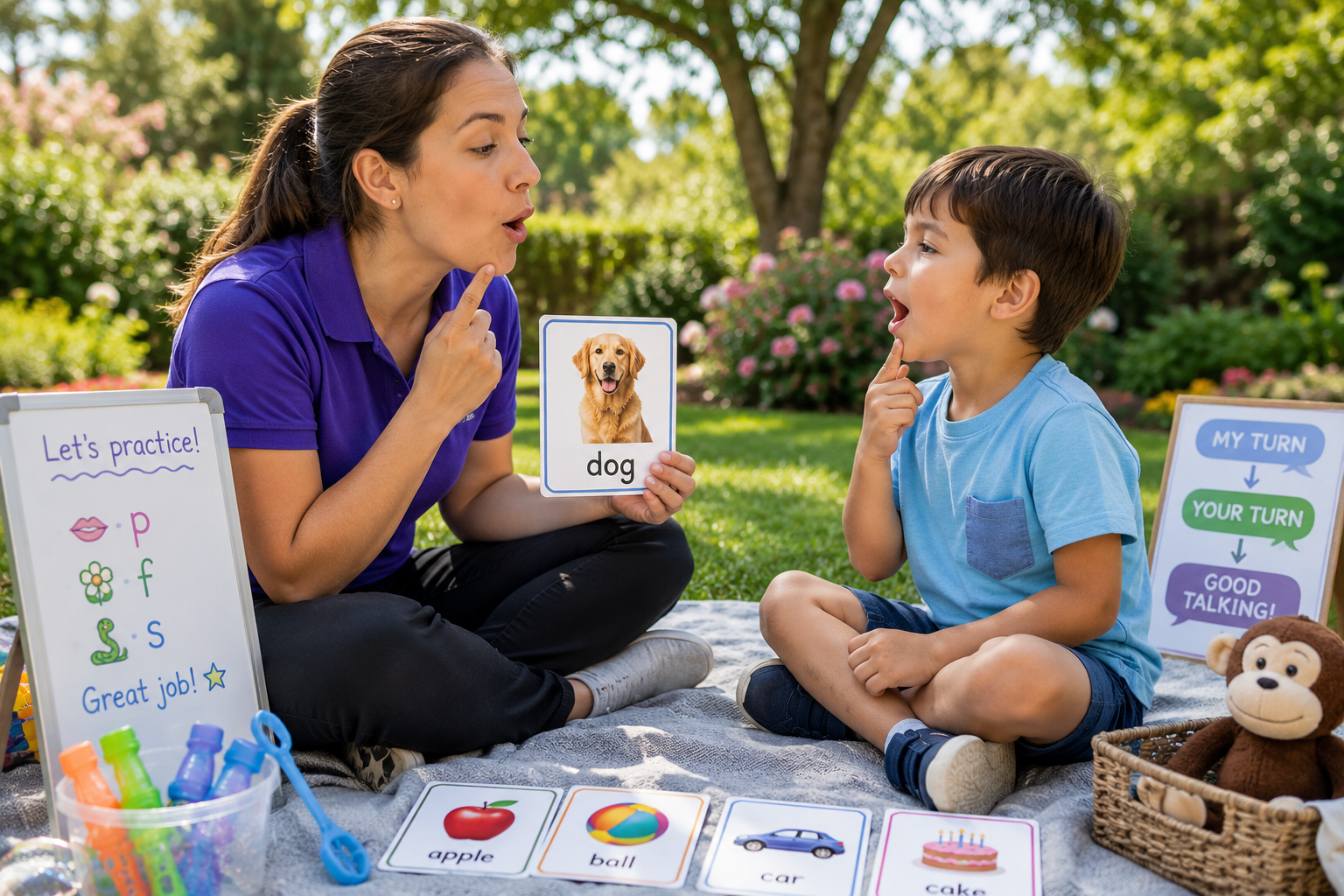
Summer vacation is a time for family trips, outdoor adventures, and a well-deserved break from the school routine. However, for children working on communication goals, the summer months can also present a challenge. Without regular classroom activities and structured learning opportunities, some children may experience a slowdown in progress or lose momentum in areas they’ve worked hard to improve. Fortunately, incorporating simple speech therapy techniques into everyday summer activities can help children maintain and even strengthen their communication skills while still enjoying their vacation.
Many opportunities for speech and language development occur naturally through play, exploration, and family interactions. By combining fun activities with targeted practice, parents can help their children continue building confidence and communication skills throughout the summer months.
Why It’s Important to Keep Up with Therapy During Summer
Communication skills are developed through repetition, consistency, and meaningful practice. Just as academic skills can decline during long school breaks, speech and language skills may also be affected when therapy routines are interrupted.
However, summer creates a valuable opportunity to practice communication in real-world situations. Instead of focusing solely on classroom activities, children can apply their skills during family outings, conversations, and hands-on experiences. These everyday interactions help reinforce what they have learned in therapy while making communication more functional and meaningful.
Maintaining progress during the summer can also make the transition back to school much smoother. Children who participate in summer speech-language activities often return to the classroom with greater confidence and readiness to engage in learning and social activities.
Speech Therapy Techniques to Keep Skills Strong All Summer
Summer activities provide countless opportunities to support communication development. The key is finding ways to naturally incorporate speech therapy techniques into activities your child already enjoys.
Turn Outdoor Adventures Into Language Opportunities
Outdoor activities can encourage curiosity, conversation, and learning. Whether you’re taking a walk around the neighborhood or visiting a local park, there are many opportunities to practice communication skills.
Parents can encourage language development by:
- Asking children to describe what they see, hear, or feel
- Playing scavenger hunt games using descriptive clues
- Practicing following multi-step directions
- Discussing the sequence of events during an outing
These experiences naturally build vocabulary and encourage expressive language skills.
Use Water Play to Encourage Communication
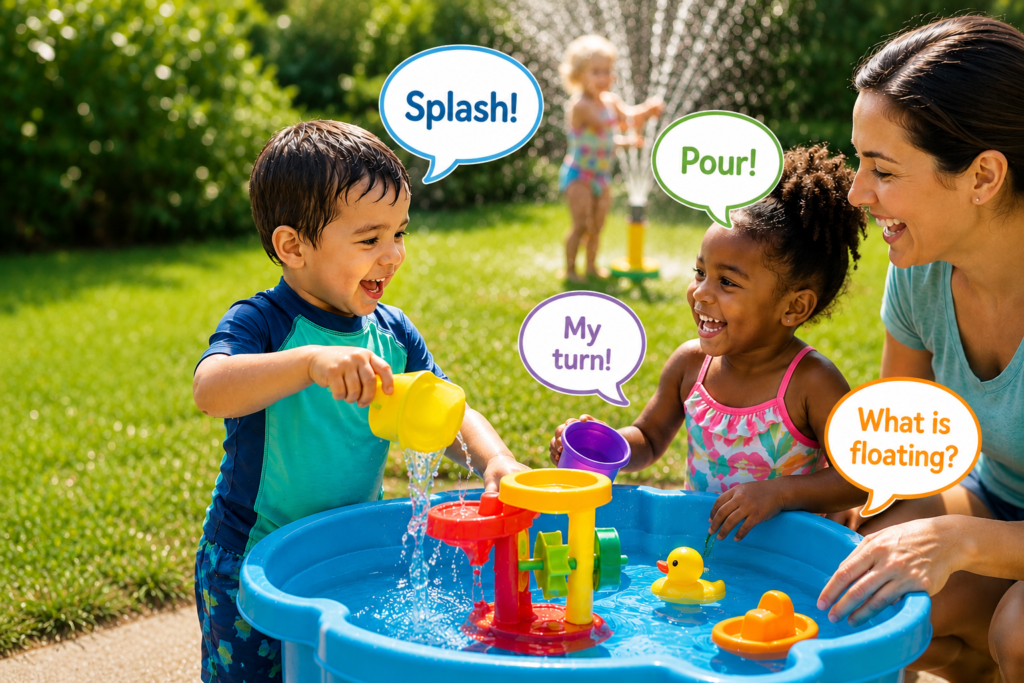
Water play is a favorite summer activity for many children and provides an excellent setting for language practice. Activities such as sprinklers, water tables, splash pads, and water balloons create opportunities for children to communicate in meaningful ways.
During water play, parents can focus on:
- Teaching action words such as splash, pour, spray, and float
- Encouraging requests and comments
- Practicing turn-taking language
- Asking simple questions about the activity
These speech therapy techniques help children develop both vocabulary and conversational skills while having fun.
Read Summer-Themed Books Together
Reading remains one of the most effective ways to support communication development year-round. Summer-themed books can help children stay engaged while continuing to build important language skills.
As you read together, encourage your child to:
- Answer questions about the story
- Predict what might happen next
- Retell events in order
- Describe characters and settings
Even a few minutes of reading each day can make a meaningful difference.
Cook and Bake Together
Cooking combines fun with learning and naturally incorporates several communication skills at once. Following recipes helps children practice sequencing, listening, and comprehension.
Children can participate by:
- Following directions step by step
- Learning new vocabulary words
- Requesting ingredients or tools
- Describing textures, smells, and tastes
These activities make speech and language practice feel purposeful and rewarding.
Use Games to Promote Communication
Board games, card games, and interactive family games offer excellent opportunities for speech and language development.
Games encourage:
- Turn-taking
- Listening skills
- Problem-solving
- Social communication
- Articulation practice
Many parents find that games are among the easiest speech therapy techniques to incorporate because children are highly motivated to participate.
Encourage Storytelling and Conversation
One of the simplest yet most effective speech therapy techniques is having regular conversations with your child.
Regular conversations are one of the easiest and most effective ways to reinforce communication skills throughout the summer. Everyday experiences provide countless opportunities for children to practice expressing their thoughts, organizing ideas, and building confidence when speaking.
Parents can encourage storytelling and conversation by:
- Talking about vacations, family outings, and favorite summer activities
- Encouraging children to retell events in chronological order
- Asking open-ended questions that require more than a yes-or-no response
- Prompting children to describe people, places, and experiences in detail
- Building sentence structure, vocabulary, and narrative skills through discussion
These simple interactions help children become more comfortable expressing themselves while strengthening the communication skills they use every day.
How Continuing Therapy Sessions During the Summer Can Help
While home-based activities are incredibly valuable, they work best when combined with ongoing professional support. Continuing therapy sessions during the summer helps children maintain momentum and continue making progress toward their goals.
Speech-language pathologists can monitor progress, adjust treatment plans, and introduce new strategies as skills improve. Summer therapy also provides parents with additional guidance on incorporating effective speech therapy techniques into daily routines.
Why Choose Speech Pathology Solutions
Communication development doesn’t stop when school lets out. While our experienced speech-language pathologists provide individualized therapy to help children strengthen their skills throughout the year, we believe parents play an essential role in the therapy process. At Speech Pathology Solutions, we work closely with families to provide practical strategies that can be incorporated into everyday activities at home and in the community.
Whether your child is working on speech sounds, language development, social communication, fluency, or feeding and swallowing goals, our team is committed to providing personalized care in a supportive and encouraging environment. Contact us today to schedule your child’s summer sessions with us.

Summer Speech Therapy Techniques FAQs
Why is it important to continue practicing speech skills during summer?
Consistent practice through summer speech-language activities helps maintain progress, prevent skill regression, and support a smoother transition back to school.
Can speech therapy activities be incorporated into everyday summer routines?
Yes. Activities like reading, cooking, outdoor play, and family outings can naturally support the development of communication.
How can reading help strengthen speech and language skills?
Reading builds vocabulary, comprehension, sequencing, and conversational skills through discussion and storytelling.
Are games effective for speech and language practice?
Yes. Games encourage turn-taking, listening, problem-solving, social communication, and articulation practice.
Should my child continue speech therapy sessions during the summer?
Many children benefit from continuing therapy because it helps maintain momentum and allows goals to continue progressing.
How can parents support speech therapy goals at home?
Parents can incorporate speech therapy techniques into daily activities, encourage conversation, and follow recommendations from their speech-language pathologist.